
OUR MISSION
The Burré lab is interested in understanding pathogenic events at the neuronal synapse that trigger synaptopathies, with a focus on neurodevelopmental and neurodegenerative disorders. We envision that defining early pathological events at the synapse will provide new avenues for preventing and/or treating neurological and neurodegenerative diseases in humans.
GOALS
Neurons communicate via release of neurotransmitters from presynaptic terminals. This requires intact functioning of the protein expression and trafficking machinery, of mitochondria to meet a synapses’ need for energy, of the proteasome/ubiquitin system and lysosomes to clear aged and misfolded proteins, and of the synaptic vesicle cycle to mediate continuous neurotransmission. Much evidence points to presynaptic terminals as initiation site for specific neurodevelopmental and neurodegenerative disorders such as Parkinson’s disease and SNAREopathies, where synaptic dysfunction has been shown to precede neuron death and to occur long before neuropathological symptoms become apparent. Yet, virtually nothing is known about processes involved.
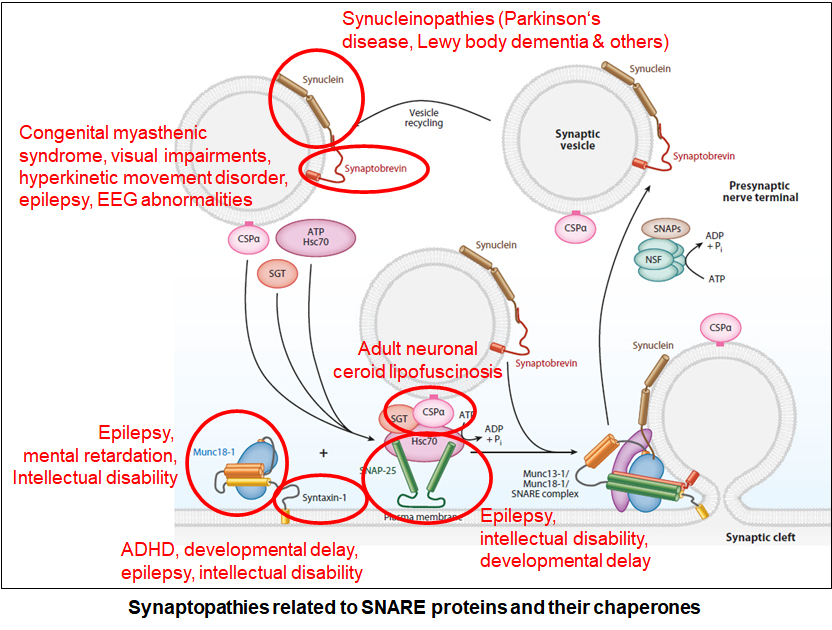 We are specifically interested in neurological diseases linked to the dysfunction of the synaptic SNARE proteins synaptobrevin-2/VAMP2, SNAP-25 and syntaxin-1, as well as of their chaperones alpha-synuclein, CSPalpha and Munc18-1/STXBP1. SNARE proteins are essential components of the neurotransmitter release machinery, and mutations in SNARE proteins or their chaperones lead to devastating diseases – termed SNAREopathies – which include symptoms ranging from neurodegeneration to intellectual disability and epilepsy, among others. These devastating diseases are currently intractable to treatment, and symptomatic relief is currently the only available relief.
Synucleinopathies include a wide range of neurodegenerative disorders, including Parkinson’s disease, Lewy body dementia, and Multiple system atrophy. In addition, aggregation of alpha-synuclein is also a co-pathology of many other disorders such as Alzheimer’s disease, Pick’s disease, frontotemporal dementia, and ALS. The Burré lab focuses on understanding the physiological functions of alpha-, beta- and gamma-synucleins at the neuronal synapse, and aims to identify how both loss of function and gain of function of the synucleins contributes to disease.
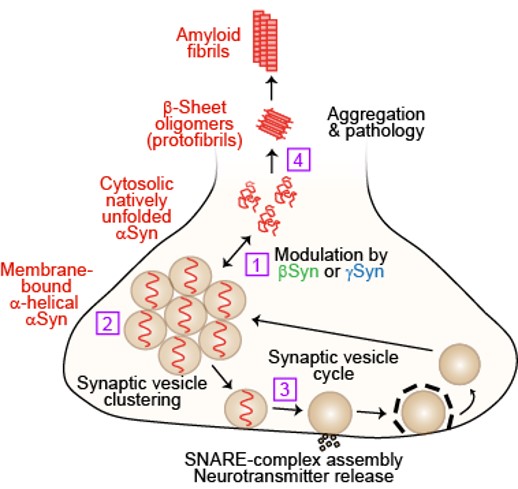 For all disorders, we are exploring the underlying disease mechanisms at the molecular level, many of which remain unknown. Once identified, we utilize the knowledge gained to develop targeted therapeutic strategies in collaboration with our clinicians and family foundations, with the ultimate goal to translate our findings to human therapies.
CURRENT PROJECTS
- Investigate the functions and dysfunction of synucleins at the synapse, a protein family implicated in Parkinson’s Disease, Alzheimer’s Disease, multiple system atrophy, and Lewy body dementia
- Determine routes and cellular vulnerability to spread of alpha-synuclein pathology
- Determine how disease-linked mutations in Munc18-1/STXBP1 cause varied encephalopathies
- Investigate the effect of disease-linked mutations in SNAP-25 on SNAP-25 function and dysfunction
- Assess how human mutations in VAMP2/synaptobrevin-2 affects its function
- Design and test rational rescue strategies to overcome deficits identified in diseases above
- Development of alpha-synuclein biomarkers at a prodromal disease stage
- Identify other yet-unknown mechanisms triggering synaptic dysfunction and degeneration in various diseases using exploratory screens
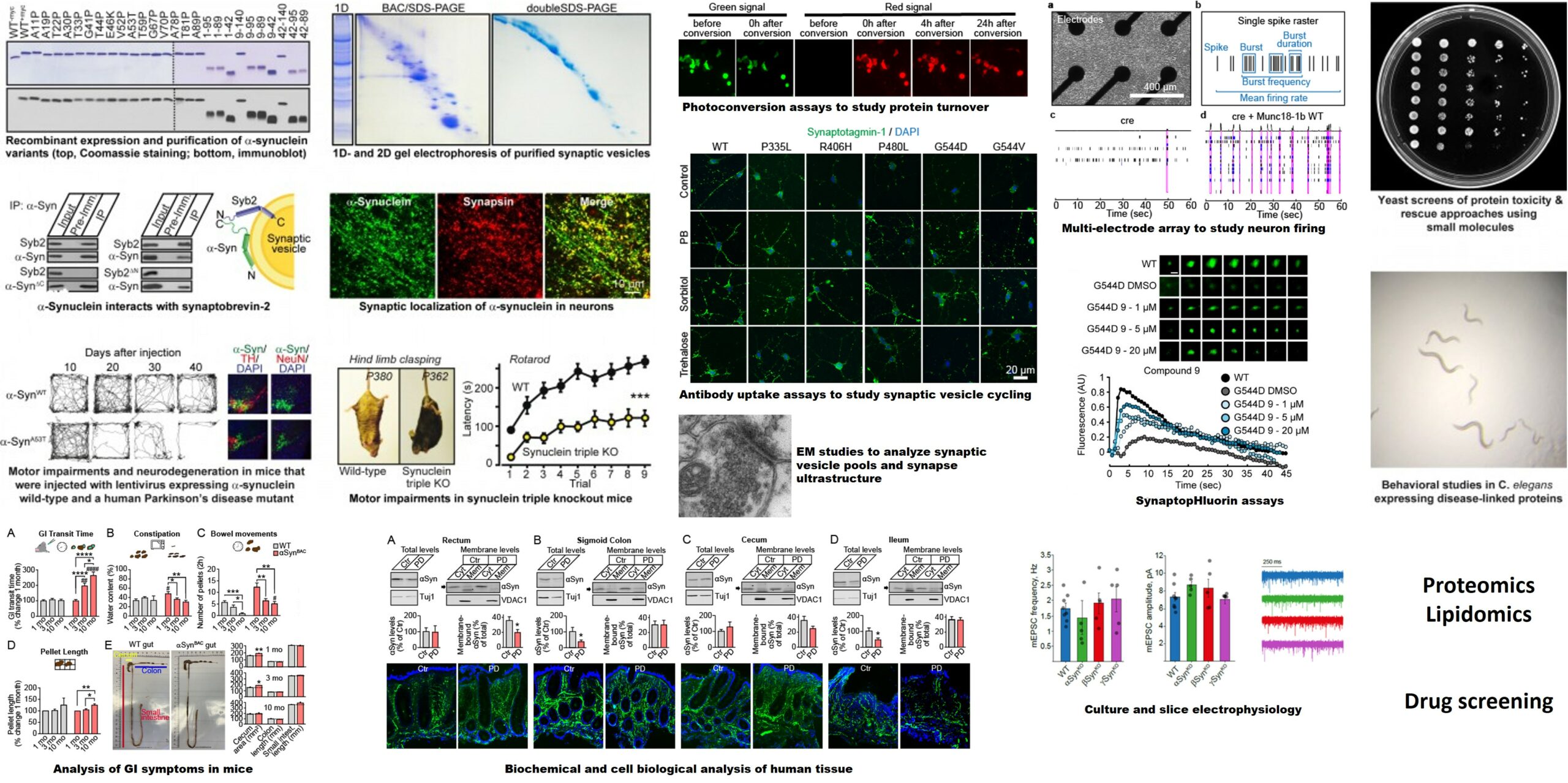
To address these aims, we employ a broad array of technologies, including biophysics, biochemistry, cell biology, electrophysiology, behavior, and various modalities of fixed and live imaging techniques in C. elegans, mouse models of neuropathology and human tissue.
COLLABORATIONS
We are collaborating with the laboratories of Dr. Jeremy Dittman, Dr. David Eliezer, Dr. Li Gan, Dr. M. Elizabeth Ross, and Dr. Manu Sharma at Weill Cornell Medicine, as well as with laboratory of Dr. Jiajie Diao at U. Cincinnati, of Dr. Vladimir Buchman at Cardiff University, of Dr. Amanda Woerman at UMass, and of Dr. Frederic Meunier at the University of Queensland on various aspects of our research.
Our translational research in humans at Weill Cornell Medicine is in collaboration with Dr. Zachary Grinspan (Interim Chief of Child Neurology & Director of the Pediatric Epilepsy Program), Dr. Carl Crawford (Gastroenterology and Hepatology), Dr. Alexander Shtilbans (Hospital of Special Surgery), Dr. Daniel Barone (Associate Medical Director of the Weill Cornell Center for Sleep Medicine), and Dr. Andrea Yoo (Neurologist).
CLINICAL TRIALS
Two pilot clinical trials are currently on-going, based on our research findings:
(1) Test the efficacy of 4-phenylbutyrate in children with STXBP1 mutations: https://jcto.weill.cornell.edu/open_clinical_trials/phenylbutyrate-for-stxbp1-encephalopathy-pilot & https://clinicaltrials.gov/ct2/show/NCT04937062.
(2) Biochemical characterization of Parkinson’s disease-related proteins in the enteric nervous system: https://jcto.weill.cornell.edu/open_clinical_trials/biochemical-characterization-of-parkinsons-disease-related-proteins-in-the-enteric-nervous-system & https://www.clinicaltrials.gov/ct2/show/NCT05347407